This week I mainly read about economics. After a touch of the inspirational Integral Theory, I decided to go into the deep! First, I was curious about how the integral theory can be utilized on the organizational level. That's how I met with Teal organizations and Frederic Laloux. But if we see the world on an integral view, we soon realize the organization cannot live as an island. It is hardly interweaved into economics. Many times I do a presentation. I use this evolutionary process, like in the following picture.
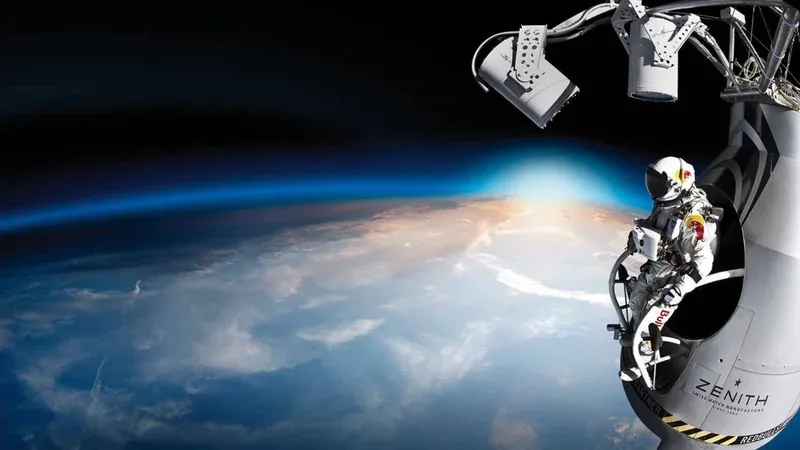
What a child sees from the world when stepping on a chair. What difference can we expect when we go to a viewpoint? What do we see from the world when we fly over a country with a plane? And what seen Felix Baumgartner when he jumped out from the capsule?
I think this is an excellent visualization of how many details we see from the world if we see a bigger picture!
There is another keen message on this presentation! We need to make a magnitude more significant effort to form our worldview.
After reading several sections from the book of Integral Economics, it is incontestable the world needs to change! The capitalist economics polarized the world in an unsustainable way.
Today 82% of the income belongs to less than 1% of the population, while environmental loads 71% belong to 100 companies. It is clear to see the distribution of goods unbalanced. If we go forward on this road, we will have more significant problems. Just think about environmental change. Nowadays, only those believe this is Greenpeace fireworks who fool. We can see how fires around the globe demolish thousands of living.
As the resources of the earth not unlimited, we cannot bid on the infinite growth of the economics. Sooner or later, more and more people will realize, we need to transform our economies to a sustainable model. For this purpose, the Integral economics is an excellent starting point. It goes back to the grassroots of ancient societies with the core values of them. From Socrates to the ancient aboriginal civilizations. We can learn a lot from these teachings. Without a full list I have inspirations from:
Islamic economicsBuddhist economicsConfucian economicsAboriginal economicsAfrican Economic humanismI'm still on a journey in this book, but I already have more than 20 books, which I need to read to better understand the standard best practices from all of these books.
Many times when these topics arise, everyone thinks it is a newly invented theory. They are wrong. Many excellent examples show some companies work in these philosophies over the past 50 years.
Just one example is the Egyptian Sekem company. They have a sustainable business model that both have humanity and a sustainable environment!
There is another aspect that I didn't touch in this article prior. The generation change. As our generation mixture changing, the newest generations more conscious about the environment. This fact has two sides. They want to work for a company that cares about the environment, and they prefer to purchase products from those companies that care about the environment.
To be able to fill the vacant positions in the future, we need a culture that aligned with the expectations of the newest generations. This is a huge challenge for current management teams because most of them belong to the Baby Boomers generation. They simply don't understand the differences which each generation has because they only have conversations in their age. To solve these problems, diversity helps a lot! Decision-making committees must involve different cultures, ages, genders, to make better-integrated decisions which cover a more extensive range of the population.