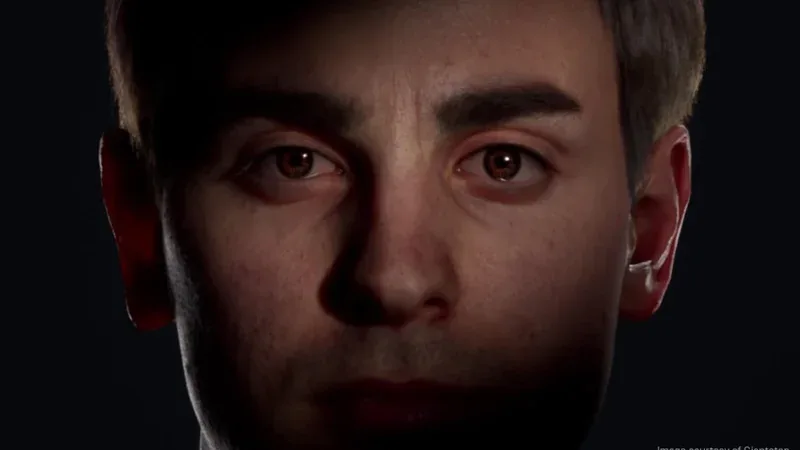
The past week I had lots of thoughts around the topic of digital humans. I have seen a lot of news, which shows interest in this topic. The last of this news was Samsung's announcement at CES.
I think the evolution path is evident in this decade. We expect AI singularity at the end of this decade, so we will see the continuous transformation of the workforce.
The mutual part of this journey is Learning. How we can gather knowledge in AI! For this purpose, I have a great idea. It comes from a TED presentation, where the main subject was Learning new languages.
There is a scene in the video where a Brazilian guy learns the Russian language. This gave me the idea if it works with humans, why does it not work with the AI?
In the past, there were a lot of web pages, chat rooms designed for language learning. Several volunteers help to teach language. If they help humans, why they don't help for the AI?
With artificial intelligence, we can mine the conversations to gather knowledge from the information. After some thinking, I realized maybe this already happening behind the curtains.
Just imagine how much conversations are done on Wechat, Facebook messenger, Viber, Google messaging, Apple iMessage...
I'm sure there is a small paragraph in terms and conditions which authorize the owners of these services to analyze the conversations.
This is the first step in the evolutionary procedure. Like in the early years of the World Wide Web, when it only had the text.
The fundamental problem with the text-only interface it creates different emotions in the reader. To have proper information transfer, we need to color the information with additional pieces of color. It's the emotion that naturally comes from body language.
How can we teach this information to the machines? We arrive at the examination of the motion picture and voice. Just think about Youtube service, telepresence manufacturers like Cisco, or just merely the video call in most communication platforms.
The inherent possibility in this information is far significant then most of us think. The technology giants behind these services readily able to enhance their AI, which foundational element of the Digital Humans.
I think on these lands of science we already have great results.
What we undoubtedly have scantily is the digitalization. Both the three dimensional model of humans and learning the behaviors.
It will be a frightening moment when every movement, reaction, mimics will be recorded, but this is the only way how we can economically teach our digital twin.
There is already some project where it started, but nowadays it is a really time-consuming procedure.
The digitalization of ourselves has a significant outcome, which we cannot reach. One is that we can be everywhere all the time. How much times we hear the sentence:
You must have a clone!Just imagine this clone has better figures than even yourself! It can remember every promise you made. It can listen without interrupting the other participant accidentally. It can monitor the reactions, even the smallest mimics of the other, and change the wording according to the responses to give information the way it is the most effective!
And last but not least, the most important feature! AI works without preconception when it is ideal. I know there were several trials when the AI went to a Nazi crazy identity. I think most of the technology companies learned the lesson, to first build the core ethical values as a base model, prior they start the learning procedure.
We are still on a long journey, but I think it worth the efforts!